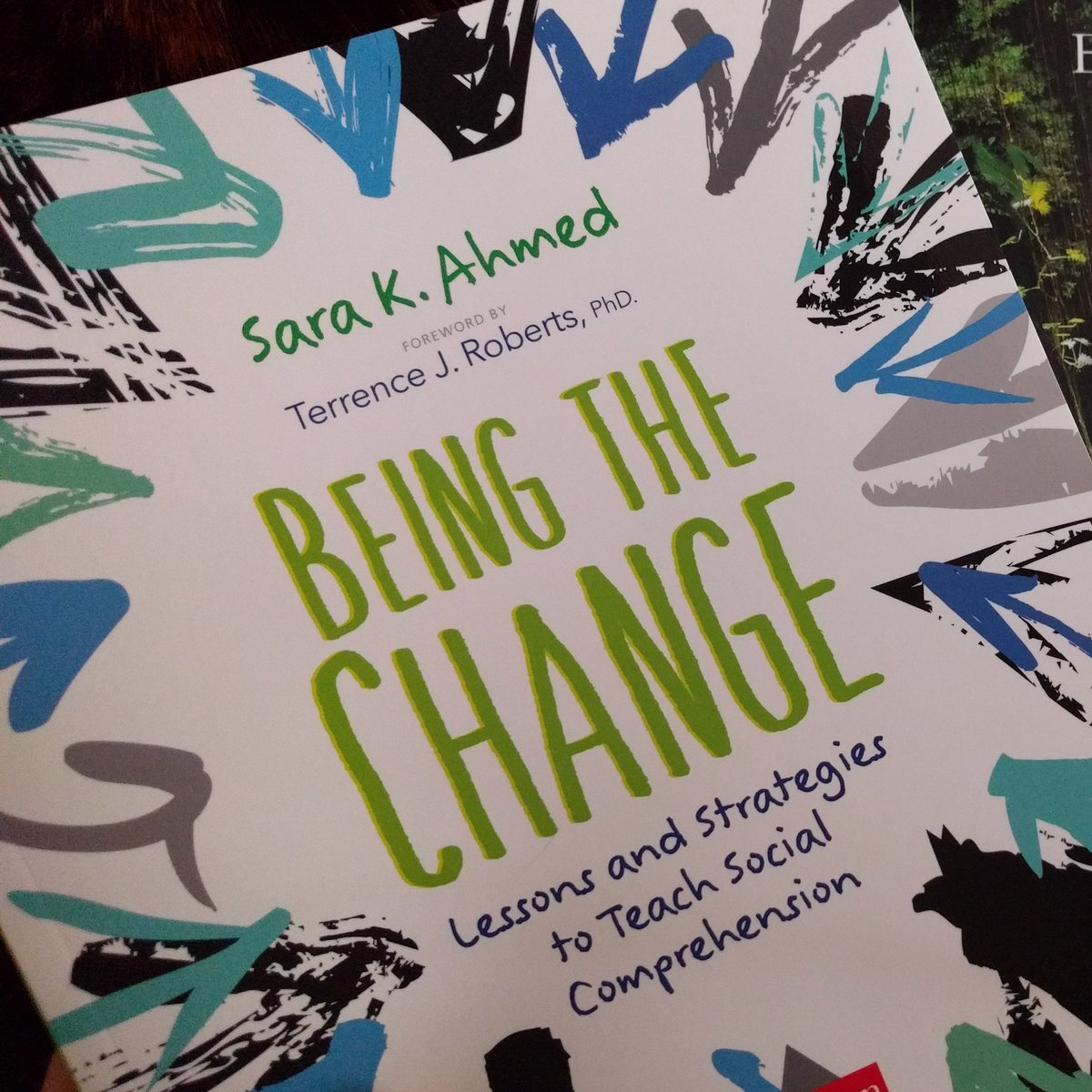
Thoughts on Chapters 5-6: Finding Humanity in Ourselves and Others
Even just the chapter titles for these last two chapters make me hopeful: finding humanity in ourselves and others (Chapter 5) and facing crisis together (Chapter 6). As I'm sure we can all agree, there has never been a more timely book than this one or a more important time to be nurturing a sense of humanity in our students and communities. I love how the lessons in the previous chapters build towards this point, how understanding ourselves and our place in the world can help us better reach out and understand others.
There are so many wonderful books out there to help students grapple with some of the issues in these chapters, especially around bullying and being an "upstander" rather than a bystander. Sara includes just a few in her list of resources for understanding our universe of obligation, so I thought I'd round up some others for those interested. Did I miss any of your favorites?
Text Set on Being an Upstander
I've subdivided this list into "younger" and "middle grade / middle school" but you could absolutely use any of these books with older students too (and even vice-versa, depending on your students).
For younger students
One by Kathryn Otoshi. This book deals directly with the issue of bystanders vs. upstanders as a group of colored blobs are variously bullied and intimidated by Red. Only one blue has the courage to speak up and encourage, does change happen. Follow up books include Zero (dealing with self-doubt) and Two (dealing with issues of exclusive friendships).
Be a Friend (2016) by Selina Yoon. Dennis, who is a mime, lives life his own way but still feels lonely, until another student reaches out to him. I think this is a book that needs discussion and conversation to guide it but that it can help kids to see how stepping up and reaching out can positively impact someone else.
Peanut Butter and Jellyfish by Jarrett Krosoczka. This story of friendship, bullying and doing what is right revolves around two friends, Peanut Butter (a sea horse) and Jellyfish, and Crabby, their cranky neighbor. This story could foster discussion among kids about bullying but also about what can happen when friendships become exclusive. Cute illustrations too. (H/T Linda at Teacher Dance.)
The Smallest Girl in the Smallest Grade (2015) by Justin Roberts and illustrated by Christian Robinson. I loved the illustrations in this book - especially the diversity of kids represented! But the story is very simplistic. One little girl raises one little finger and suddenly the whole world decides to be nice to each other? Switching from being a bystander to doing something about it takes more work than that, but this could be a good book for younger students as a place to start a conversation.
For middle grade or middle school students
Be Kind by Pat Zietlow Miller and illustrated by Jen Hill. This one is a must-have for any classroom or library. It addresses issues of bullying and bystanders but in a much more complex and meaningful way than many books for kids. Truly we need the power of this book's message about how individual actions (even if they may seem small) can have a big impact.
Red by Jan de Kinder. This book brings up some of the complexities of being an upstander, as one character (the girl on the cover) is actually a bit of a participant in the initial bullying of her classmate, but through the course of the book her understanding of her role changes. I think it's important for kids to see that they can be complicit in events unfolding around them - but also that they can then do something about them.
Wings (2000) by Christopher Myers. This unique take on bullying features a supporting character, Ikarus Jackson, a young (presumably black) boy with wings. The narrator, a bystander and fellow student, shares his/her own observations about the new boy and everyone's reactions to him. Only after witnessing much does the narrator step up and stop the bullying. This could be a great book for generating discussion about diversity, inclusion, bullying, and differences.
What are your favorite books for teaching kids about empathy and being an upstander?
Chapter 3 covers bias, microaggressions, and countering stereotypes and prejudice, while Chapter 4 hits on becoming better informed. There are so many people in our country right now who need these understandings uploaded directly into their brains! [Doesn't it say something that my Google spellchecker does not recognize "microaggression" as a word? Sigh.]
I love the combination of lessons in these two sections: working towards understanding personal bias (Chapter 3) and working towards understanding systemic bias, like "fake news" and evaluating sources (Chapter 4). Media literacy is a HUGE topic right now and one that every teacher needs to be addressing.
There is a great new book series out to help teachers educate students about how to evaluate information: Two Truths and a Lie: It's Alive! and Two Truths and a Lie: Histories and Mysteries. Each book is divided into chapters that feature three nonfiction articles around a related theme. However, one article is a lie! Readers are challenged to carefully read each article and see if they can sleuth out the truths from the fiction. A chapter of research skills is provided that highlights some great strategies to use too. I think this will be a really fun way to get kids thinking critically about how and where they get their information. Definitely a great fit for the lessons in Being the Change!
What resources have you found that you might use with the lessons from these two chapters?
If you are new to The Logonauts, my name is Katie, and I've been a classroom teacher for 10 years. I taught 3rd grade for 8 years, 4th grade for 4 years (concurrently with 3rd grade), 7th grade for 2 years, and this fall I will be teaching 5th grade, all at the same K-8 school in Wisconsin. Pfew! I am so excited about the potential for this book as I am working to construct and refine what fifth grade curriculum looks like at my school.
Finally, I am also a new mom (!) working to sneak moments of professional development (and meals) in between an only-ever 35-minute-long nap schedule. Yikes.
Big Takeaways from the Introduction and Chapters 1-2
Full disclosure: I read this entire book the night it arrived. There is so much here to use immediately with students and so much potential for changing minds and hearts along the way. I was thrilled when Being the Change was announced as the #cyberPD choice.
One of my favorite things about this book is the way it is set up to get right to the heart of the lessons while also providing detailed descriptions that would allow almost any teacher to simply pick up the book and incorporate a given lesson into their day. Ideas like the two-column journaling format ("At first I thought ... Now I think ...") are easily adaptable across a wide-range of grade and skill levels, as well as applicable to a wide-range of lessons and topics.
At the same time, there is a discernible progression both within each chapter and within the book as a whole, so it is easy to see how incorporating each one would allow students to build and build on their self-understanding leading towards empathy and understanding of others.
Sample Poem: Where I'm From
I had a few days between units with my seventh graders before my maternity leave last spring and was looking for quick one-off lessons to fill in. We have a regular Poetry Friday time (which I have done across all grade levels), so it was a natural fit to find a poetry prompt to use. I stumbled across George Ella Lyon's incredible "Where I'm From" poem, which just happens to be featured in Chapter 1. (Be sure to click on the audio to hear her read the poem aloud. Amazing!) We had just finished a unit on identity and family history, so it was easy for my students to bridge the gap into sharing that knowledge in a different form. Below is one of those student examples:
Where I’m From
I’m from the water,
From mud and from rain.
I’m from watching the TV on Sundays,
From reading a nice crisp book.
I’m from the fire,
Crackling in the pit.
I’m from the food,
Sweet warm, soft.
From the green grass,
Thick trees with crunchy leaves.
I’m from the home,
the family
and most importantly,
the heart.
I promise you, you could hear the heart of the classroom community beating as several kids volunteered to read their poems aloud at the end of the period. You don't want to miss out on the kind of impact this lesson (and, I'm sure, all the others) can have on your students, your classroom, and yourself.
I look forward to hearing everyone else's thoughts about the book and seeing how our conversations evolve through the rest of the month! Join in via the Google+ discussion group. (Just FYI - I am traveling this week with limited internet access, so I will get back to all your comments and posts later in the week.)
Reading logs have long been a staple of the elementary school years. Students logged books they read or minutes they read or even pages they read. Sometimes reading logs would be sent home, other times they would stay at school, or (perhaps most often) they would lie dormant at the bottom of a backpack.
As part of this year's #cyberPD, many of us were forced to grapple with how reading logs might connect to the three big ideas of the book: authenticity, intentionality, and connectedness. (This year's #cyberPD book club selection was Digital Reading: What's Essential in Grades 3-8 by William L. Bass II and Franki Sibberson.)
Authenticity, Intentionality, and Reading Logs
Reading logs have always served multiple purposes. Teachers like reading logs as a means of tracking student reading and growth over time. The best reading logs are often used for student self-reflection and goal setting. At-home reading logs can add an additional layer of accountability, as parents and family members partner with a child to encourage and track his/her reading.
(Please note that I am not advocating for either punitive nor rewards-based types of reading logs. Students should read for authentic reasons and not because a) there will be negative consequences if they do not read nor because b) they can win some kind of prize or reward if they do read.)
Connectedness and Digital Reading Logs
Digital reading logs add many features that are unavailable in traditional pencil and paper reading logs. Connectedness is a huge feature of digital reading logs. Digital reading logs allow students to share their reading and book recommendations with others. Many digital reading log programs also offer targeted suggestions based on previous books.
Kids love receiving book recommendations from others and love it when a friend or family member reads a book they recommended to them. Digital reading logs can help grow and inspire an authentic reading community.
Comparing Digital Reading Logs
Many different teachers in the #cyberPD community offered their suggestions and recommendations about various online reading logs. This post offers a quick overview of the most-recommended of these programs to help you choose the one that best fits your classroom and your intentions.
BiblioNasium
Biblionasium is a free site that allows teachers to register (with an email address) and then create student accounts with individual log-ins. You can add books to your shelf, rate them, and write reviews. You can also send a personalized recommendation to a classmate. When you search for a book, Biblionasium provides an engaging summary as well as the reading level (teachers can choose between several measures when establishing their account). Parents can create separate accounts and monitor their child's progress, as well as see challenges and recommendations from the teacher.
Teachers choose the settings for any group (class) that they create. This includes whether students' book reviews can be shared, whether reviews must first be approved by the teacher, and whether the site may share book trailers, author interviews, and other videos with students.
The Home page provides a daily book recommendation from "Coach Chip Manzee" (a cartoon monkey). My Books shows a student's bookshelf, as seen above. My Friends includes a list of classmates, as well as any other Friends the child has added (parental approval is required to add friends outside of the class group). Kids can set up their profile to include an avatar picture and modify the background of the site.
My Reading Log functions like a traditional daily reading log. After adding a book to their shelf, a student can record what he/she read, the date, and how many pages or minutes. A text box is also included for comments.
Challenges / My Awards allows the student, teachers, or parents to create a specific reading challenge. Books that are added to a students library and then logged in the Reading Log can count towards challenges and rewards.
My Suggested Reading offers book recommendations (in a bookshelf format) in multiple categories including summer reading, popular series, prize winners, and more. You can watch the introductory trailer, below, for more details.
What I Like about BiblioNasium
BiblioNasium is quick and easy to set up. Only the teacher needs to provide an email address, and you can either create your own passwords for each student or let the site generate them. Groups can be larger than just one classroom (they recommend less than 100 members). The reports function makes it easy to see students' reading logs. It is easy for students to search and recommend books, and the bookshelf-style layout works well to display books and search results. BiblioNasium is also a closed community (unless parents enable adding friends), keeping students secure. You can read several other reviews of BiblioNasium here.
What I Wish for BiblioNasium
I wish there was an easy way to disable the Challenges / Awards component, as this does not match my teaching philosophy. Some teachers have mentioned that older students can be turned off by the bright color palette of the site, feeling that it is babyish.
Bookopolis
Bookopolis is a similar free site that allows teachers to log in (with an email account, via Gmail, or via Facebook) and create student accounts. Students can search for books, rate and review books, play games, and share books with friends and classmates. Students earn points and badges for completing certain tasks. Parents can create linked accounts that allow them to track their child's reading and permit their child to add friends outside their classmates. Teachers may also opt-in to a program that allows them to earn free books as students write reviews.
If students have used Bookopolis in a previous year, there is a merge option available that allows them to import their previous reading history. Bookopolis is also available as an app through Edmodo.
Students can write free-form reviews of books or use the Book Buzz categories (short summary / best part / why you have to read it) to create their review. There is also a "report" option that asks several levels of generic questions about the book. Students can also personally recommend a book to a friend. When students search for a book there is also an option to buy the book (links to Amazon) or to borrow the book (links to WorldCat). Students may also read reviews written by other students within Bookopolis.
There is also a reading log feature that allows students to add books from their "I'm Reading Now" list and record the number of minutes and pages read. They can also add a comment in the text box.
Bookopolis appears to still be under construction for some functions. When I did a search and wrote a review for Kate Messner's Marty McGuire, the grade level and reading level information was missing, and the "Book Extras" and "Discussion" tabs just say "This feature coming soon."
In addition to books, Bookopolis also has a "Fun and Games" tab that connects to a wide-range of word games, puzzles, and adventure games. (When I tested this feature last week, nothing happened when you clicked on the games.)
What I Like about Bookopolis
Bookopolis is easy to setup and use, and the site provides quick tutorials for first-time users. You can import students manually or upload a list. There are several different report and analysis options available for teachers. It is easy for students to search for books and write reviews. You can read other reviews of Bookopolis here.
What I Wish for Bookopolis
Some of the features and functionality of Bookopolis is still under construction, and I wish that there were more control available to teachers for which options they wanted to enable. (Personally, if I were going to use Bookopolis, I would prefer to disable the games, disable the points/badges, and disable the generic report questions about each book.)
Goodreads
Goodreads is a popular free site and app for logging and recommending books, and it is one that many teachers (myself included, follow me here) use for their personal book logs. An email address is required to create an account. Because you must be 13 years of age to register for Goodreads, it is not appropriate for younger students. Some teachers ask parents to register for the site or create a classroom, rather than individual, log-in.
Goodreads allows you to rate books you have read, write recommendations, label books that you want to read, and share all of these actions with friends. You can join groups around a given topic or interest. The site also offers suggestions of books you might like based on books you have rated. Goodreads does rely on advertisements, which are generally, but not always, book-related.
Shelfari
Shelfari, run by Amazon, is another free book logging site geared towards adults. An email address linked to an Amazon account is required to sign up. (You must be at least 13 to have your own account. Some teachers use Shelfari for class reading or ask parents to create accounts.) You can also connect other social media accounts, including Facebook and Twitter, to your account.
Shelfari allows you to read, review, and share book recommendations. You can also create and track individual reading goals. You can read reviews of others or see recommended books. The community feature allows you to connect with other readers or other groups based on common interests. Groups can share discussion-forum style posts. Shelfari does not include advertising but does link to Amazon to purchase books.
How Will You Track Your Digital Reading?
Will you use a digital tool this year to help your students track their reading? Do you have experience with one or more of these programs? Please share your thoughts or experiences in the comments below so that we can continue to learn from each other.
These end of the book, Digital Reading: What's Essential in Grades 3-8, turns our attention back to assessment. Now that we have integrated digital skills and digital reading into our classrooms, how can we not also begin to think about digital assessment? This also gets to the heart of the second professional development book club I have been participating in this summer, studying the eBook Digital Student Portfolios. (Join that Google+ Community here).
I appreciate how Bill and Franki pay attention to multiple times and forms of assessment, from the questions we ask at the beginning of the year to our on-going formative assessment to more summative projects and student reflections. Franki also shares examples of her personal goals.
One of my personal goals for next year is to incorporate on-going digital student portfolios that collect real artifacts of a child's learning, process, and progress. Right now I am working on determining what types of ongoing assessments I want to incorporate (starting with the list on pg. 90 as well as assessments I have used in the past). Then I want to establish a schedule and process to ensure that these artifacts are collected regularly.
Student reflection seems like an easy piece to transfer into the digital sphere. In the past, I had students fill out a self-reflection worksheet when they finished a major project, and this type of directed-response seems quite easy to move into a Google Doc or Google Form (like the example on pg. 94). I also like the idea that kids could then access their previous projects and reflections to do more direct comparisons of their growth and progress. Matching kid-work to kid-reflections and making them easy to refer back to would be a great improvement over paper versions!
Digital Reading: Reflections on Ch. 7
I also really appreciated this ending chapter on parents and home-school communication. My current classroom communication plan involves a print newsletter sent out every-other week in the students' homework folders, as well as a weekly summary of upcoming assignments that appears online on Thinkwave (the online gradebook program our whole school uses). Parents were also invited to comment on the kids' Kid Blog posts during the year.
I have so far resisted the urge to make my classroom newsletter digital, because I really want parents and kids to get into a weekly habit of emptying and returning the homework folders. Without the lure of the newsletter possibly drawing parents' attention, I fear I would have even more third graders who simply pull everything out of their folders, stuff the papers into the bottom of their backpacks, and let them linger there for weeks until someone happens to notice!
As our school transitions to a 1:1 school at the middle school grades, I think we will need to continue to expand our digital outreach to parents. I loved the metaphor of a "digital petting zoo" and having a BYOD (bring your own devices) night for parents to learn to harness the digital tools their children and teachers are using. Digital stewardship needs to start early and start often, and bringing in parents can only help those efforts.
These three middle chapters address the question of "What really matters?" in three different ways: authenticity (chapter 3), intentional decision making (chapter 4), and connectedness (chapter 5). For me, this really gets into the heart of the book. I already know the what/why of digital reading, so I was excited to jump into to figuring out more about the HOW.
"Authenticity is about choice and ownership" (page 31). Exactly. It's that two-way street of giving kids choice (in reading, in response, in digital tools, etc.) and showing them how to take ownership over those decisions. This then leads towards the idea that "Focusing on the learning rather than the tool created a more authentic workshop" (page 37). Kids want to know why they are doing something in addition to knowing what they need to do.
That said, there is value in limiting the number of choices (here, the number of digital tools) available and making sure that kids know how to use them well.
Tools I Already Use
In my early years of teaching, I used digital tools primarily for having kids type up finished work, including writing pieces and social studies projects. We used Microsoft Word for typing and PowerPoint for sharing presentations, research, and interactive poetry.
Last year, I started using Kid Blog with my students for the first time (read, We are Bloggers). We connected with several other classrooms in other countries as part of the Global Read Aloud and continued those connections during the year.
We also did our first Mystery Skype with another class and had a Skype author visit with the delightful Tara Lazar on World Read Aloud Day.
Tools I Want to Learn More About
I have been introduced to many more wonderful digital tools through this book group and my PLN. These are on the top of my to-implement list. Please advise!
Google Drive and other Google apps. I only just figured out that I have access to the Google Apps for Education suite via our school email accounts. After years of frustration with flash drives and third graders (if you can imagine it, it can go wrong), I'm ready for the cloud!
Evernote. My other professional development book group this summer is focusing on Digital Student Portfolios, and Evernote keeps coming up as an easy way to organize student information and share it in real-time with parents.
Twitter. I set up a class twitter account mid-way through the last school year, but never did anything with it with my students. I would love to get them active on Twitter. I also pioneered a hashtag, #3rdfor3rd, to highlight books third graders recommend for other third graders. I'd love to get some more classes involved in using it too! (Other third grade or even 2nd-5th grade classes who want to connect? Come find us at @KidLogonauts.)
Padlet. I set up a Padlet account and then never used it. This seems to be one that teachers use more frequently with devices rather than laptops, which is what I have access to. Still having problems visualizing how to run a read aloud while kids are also able to access a collective Padlet.
Haiku Deck. I like the ability to easily work with images here but may just stick with Google Slides as a first introduction to this type of tool.
I am also really interested in building a strong, curated list of suitable research web sites for kids, like Franki describes on page 82. Much of our research revolves around our social studies curriculum of learning about different countries. So far, we have mostly stuck to our local library database, World Book Online (subscription required), and Encyclopedia Britannica Online (subscription).
The opening chapters of the book focus on how to define digital reading and how to incorporate it into your current reading workshop. What I especially appreciated about these chapters were the vignettes - especially the comparisons between two example students. This really helped me visualize how digital reading could work well in a classroom setting - and how it could work less well.
There is a great multi-page questionnaire to get teachers thinking about the role of digital texts in the classroom. For myself, I have not yet made many strides towards using digital texts. In past years, I have had the occasional student bring in a device to read a book during read to self time, but that has been about it. We started blogging this past year, but mainly used our blogs as a way to share writing and book recommendations with a few partner classes.
The only time I have used digital texts with students has been displaying excerpts on the SmartBoard during writing workshop or sharing Love that Dog. (Because the book is written as a poem, I wanted students to see the words as well during our read aloud.) We are not a 1:1 or BYOD school, so I have not yet done any work with students on how to use programs or apps for annotation, etc. during digital reading.
I am looking forward to learning more about how others incorporate digital texts and digital reading into their classrooms, as I seek to figure out what fits best with what I want to accomplish with students.
"After all, most wild readers ... certainly don't build dioramas ..." (pg. 100)
But sometimes we do! I had a sudden urge to rekindle my diorama-building skills
and to share a book reflection diorama-style too.
Chapter 5, Wild Readers Show Preferences, could easily have been titled All Readers Show Preferences. I have found that those who often do not think of themselves as readers tend to have the strongest preferences at all and be the most resistant to stretching themselves or trying different books and genres.
The chapter lays out some of the types of preferences common to the authors' middle school students, along with specific student examples for each one. I especially appreciated the aside about the reading benefits of both graphic novels and rereading favorite books. I think both of these behaviors can be misinterpreted, especially by parents who wonder when their child is going to stop reading graphic novels and start reading "real" books.
I really enjoyed the kid-driven perspective of the section on "Genre Avoidance," especially the characterization of nonfiction as "all about dead presidents and whales" (Ashley, pg. 178). I agree that this perception is less common in elementary school and middle grade classrooms, especially as my students are commonly introduced to nonfiction books in many of their classes, including subjects like Math Adventure and Science and Literature. I love being able to rely on the public library to borrow big stacks of relevant nonfiction books for each of our continent-based Social Studies units, which also keeps the books fresh as they rotate in-and-out through the year.
The final piece of the book gets back to the nitty-gritty of conferring and all of the example forms provided in the Appendices. (Have I mentioned how much the organized part of me loves forms?) I appreciated the insights into the specific categories used on the Reading Habits Conference Chart and plan to incorporate some of these into my own conferring forms. I also like the inclusion of the "rate this book" with five empty stars for when students finish a book. I think this would be a great, reflective addition to student read book lists.
Question for Discussion
Do you use a specific book challenge with your students?
I was personally perplexed by the fact that the following sentence - "We should never compare book tallies between children or create competitive conditions among them" (pg. 186) - was followed four pages later by a brief discussion of the 40 Book Challenge from The Book Whisperer. How is having students track their reading by genre with the stated goal of reading 40 books during the course of the year not both a book tally and a competition? Even if you do not publicize student progress on a bulletin board in the room, it hardly sounds like the type of information students would be likely to keep to themselves. I am very curious about the experiences of other teachers with these types of challenges.
I read and thoroughly enjoyed Donalyn Miller's The Book Whisperer which came out during my first year of teaching, so I was excited to learn out that a group of teachers were doing an online book club of her newest book, Reading in the Wild. Though I am a week behind in finding out about the discussions, I was excited to get my library copy recently and catch up. This #cyberPD is being hosted by Cathy Mere of Reflect and Refine, Laura Komos of Ruminate and Invigorate, and Michelle Nero of Literacy Learning Zone.
Chapter 3 is titled Wild Readers Share Books and Reading with Other Readers, and Chapter 4 is Wild Readers Have Reading Plans. My favorite sections of these two chapters are the examples Donalyn gives for how to make reading and reading lives visible in the classroom and school communities. I am looking forward to having some additional bulletin board and wall space in my room this year, and these suggestions have sparked some ideas for how best to utilize them.
Reading Graffiti Wall - a place for students and teachers to share favorite quotes from a book. This became a touchstone place for Donalyn's class and a way for students to share their love of books and characters with each other.
Reading Doors (or Reading Displays) - what started as teachers displaying covers of favorite books (recently read and from the past) morphed into a place for groups of students to cooperate on building theme-based displays of favorite books and recommendations. A great way for students to take ownership over the book recommendation process.
Student-driven reading goals or reading resolutions - this matches a lot of what I do with having students design and evaluate quarterly reading goals, but I liked the public emphasis on students posting and sharing their resolutions (which also serves to remind themselves too, I am sure). I may incorporate some of her suggestions for different types of reading goals and challenges (pages 143-150) into the sheet my students use when choosing their own goals.
Finally, as always, I appreciate hearing how other teachers run the conferring aspect of their Reading Workshops and always like the reassurance that I am not the only one who finds conferring (and especially keeping track of conferring) complicated. I would much rather focus on having quality conversations with students about their reading and learning than worrying about which form goes where, but I like the idea of using pre-printed labels help ensure that you are meeting regularly with all students.
Wondering about the possibility of using technology (maybe Padlet) to create online versions of some of the types of displays mentioned in the book as well. Interested to hear if other teachers have used technology in that way.